

Erosion ControlHydroseeding
The effects of poor site stabilization can be devastating. Whether you’re working on a transportation project, an industrial park, a pipeline project, or something else, failing to prioritize the ground stability of your site can result in non-compliance, runoff, slope instability and washout, infrastructure damage, and much more.
That’s where hydroseeding comes in.
This planting method, used by industry experts with a high-pressure machine, is fast, effective, and supports commercial land development and site stabilization in the following ways:
Fast Erosion Control
When you know that clearing a site for development could lead to erosion, you need a solution that works quickly. Hydroseeding is the very solution you need for peace of mind during commercial land development.
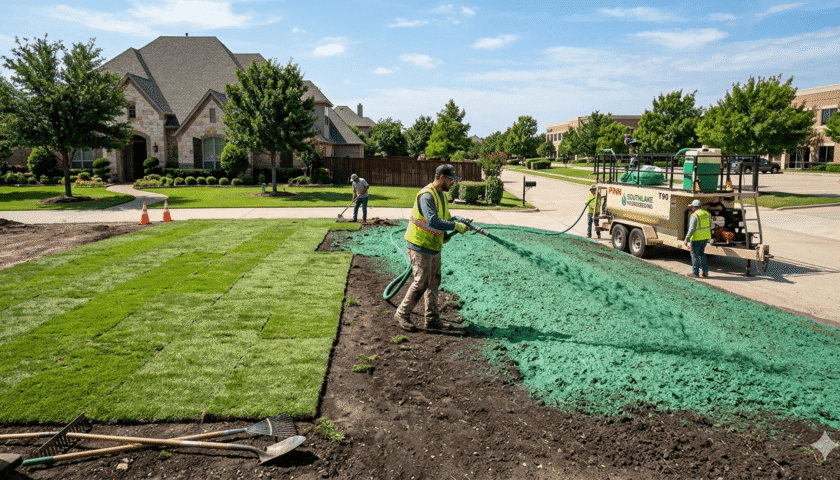
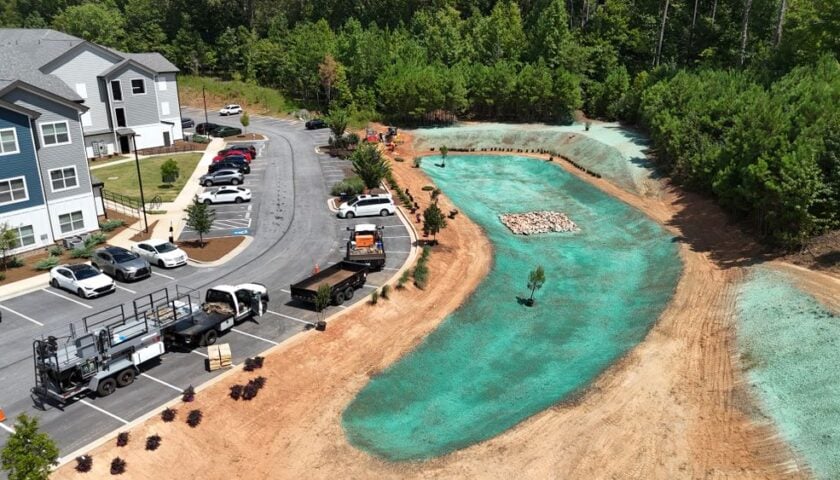
Hydroseeding involves spraying a slurry of seeds, water, mulch, and soil amendments onto prepared soil to establish new growth. The mulch in the slurry blankets the ground, shielding the exposed topsoil from the effects of heavy rain and wind that may otherwise cause runoff into nearby waterways and properties.
Regulatory Compliance
Maintaining environmental standards for civil and commercial projects is all part of meeting local council and environmental management requirements. Hydroseeding is both a temporary and permanent site stabilization method that helps project managers comply with what’s expected of them.
Site stabilization compliance is governed by the EPA’s Clean Water Act, which requires:
- Soil stabilization measures after earth-disturbing activities that will not resume for more than 14 calendar days, and shorter periods around sensitive ecosystems
- Uniform vegetation, with 70% of unpaved and non-structured area covered with perennial vegetation
- Permanent cover equivalent if vegetation is impractical, such as geotextiles or gabions
- Photo documentation of stabilized areas
Most states and local municipalities in the United States also have their own programs that impose stricter guidelines, such as geotechnical certifications in flood zones and high-slope terrains.
Dust Suppression
If it’s not mud that construction workers are dealing with, it’s dust. Exposed earth on active construction sites often generates dust, making it hard to comply with air quality and municipal regulations.
Hydroseeding suppresses dust clouds, keeps construction sites cleaner, and assists with compliance. This is because the tackifiers in the hydroseed slurry act as glue, bonding the mulch and fine soil particles together and creating a protective skin that prevents wind from lifting fine dust.
Fast Germination and Growth
Growing grass or any vegetation is traditionally a slow process, but the opposite is true with hydroseeding. In fact, it’s renowned for fast germination and growth.
In most cases, grass grows within 5-10 days and begins filling in within 2-4 weeks. Achieving a full lawn can happen in as little as 4-8 weeks. The established vegetation quickly anchors the soil, providing the site stabilization solution you’re looking for.
Compatibility with Difficult Terrain
You might assume that laying sod is a faster and more efficient land stabilization solution than hydroseeding. However, sod is only suitable on flat ground. If your land development includes uneven terrain, steep slopes, and pipeline trenches, laying sod or even manually seeding isn’t always possible.
No matter the terrain, hydroseeding is an ideal solution. Experts use high-pressure spray equipment to reach even the most challenging, hard-to-reach slopes and embankments.
Cost and Labor Efficiency
The less time you must spend on soil stabilization, the less money you also spend, and the easier it can be to remain on budget with your commercial land development project. Out of sod, manual seeding, and hydroseeding, hydroseeding is the most cost-effective and efficient.
By using high-capacity equipment, hydroseeding technicians can cover large areas of land in very little time, resulting in less manual labor and maintenance than with rolling out instant turf.
Where Hydroseeding is Best Applied
If you’re involved in commercial land development and are exploring your site stabilization options, you’re likely curious about compatibility with this erosion control method. In commercial developments, hydroseeding is best applied in:
- Slopes and batters to keep cut-and-fill slopes from sliding during heavy rainfall
- Subdivisions and business parks to quickly establish uniform landscaping for curb appeal and property value
- Infrastructure corridors to stabilize road shoulders, pipeline trenches, and railway embankments
Factors Influencing the Success of Hydroseeding
Hydroseeding is a highly effective site stabilization option for a range of projects, but its success relies on a range of factors:
- Soil preparation: Consistent, healthy growth requires proper grading and soil preparation. If your soil is compacted or nutrient-poor, amendments may be needed to improve seed establishment.
- Seed selection: Different plants and grasses thrive in different environments. Ensure the seeds you choose are suited to your area by considering your climate, soil conditions, land use, desired appearance, and sun exposure.
- Tackifiers and mulch: Healthy growth relies on mulch to retain moisture and protect seeds from wind and heat. It also needs binding agents, known as tackifiers, to bind the slurry components together.
- Irrigation and maintenance: Hydroseeded areas must be well-maintained during the germination phase to ensure healthy growth. It may be necessary to install temporary irrigation systems or to establish watering schedules. Maintenance may include fertilization, watering, mowing, weed management, and overseeding.
Schedule Hydroseeding Services with Sandy Creek Hydroseeding in Monroe, Georgia
The entire success of your commercial development can rely on the effectiveness of your soil stabilization techniques and methods. If you haven’t yet created an environmental plan for your upcoming project, talk to the team at Sandy Creek Hydroseeding. Our environmentally friendly hydroseeding service could be the efficient, cost-effective soil stabilization solution you seek.