

logotype
  • Home
  • Services
    • Hydroseeding
    • Land & Brush Clearing
    • Silt Fence & Erosion Control
  • Gallery
  • Blog
  • FAQs
  • Reviews
  • About Us
  • Contact Us
Get in Touch
logotype
logotype
  • Home
  • Services
    • Hydroseeding
    • Land & Brush Clearing
    • Silt Fence & Erosion Control
  • Gallery
  • Blog
  • FAQs
  • Reviews
  • About Us
  • Contact Us
Get in Touch
logotype
  • Home
  • Services
    • Hydroseeding
    • Land & Brush Clearing
    • Silt Fence & Erosion Control
  • Gallery
  • Blog
  • FAQs
  • Reviews
  • About Us
  • Contact Us

Call Us

404-375-0967

Hydroseeding
HomeArchive by Category "Hydroseeding"

Category: Hydroseeding

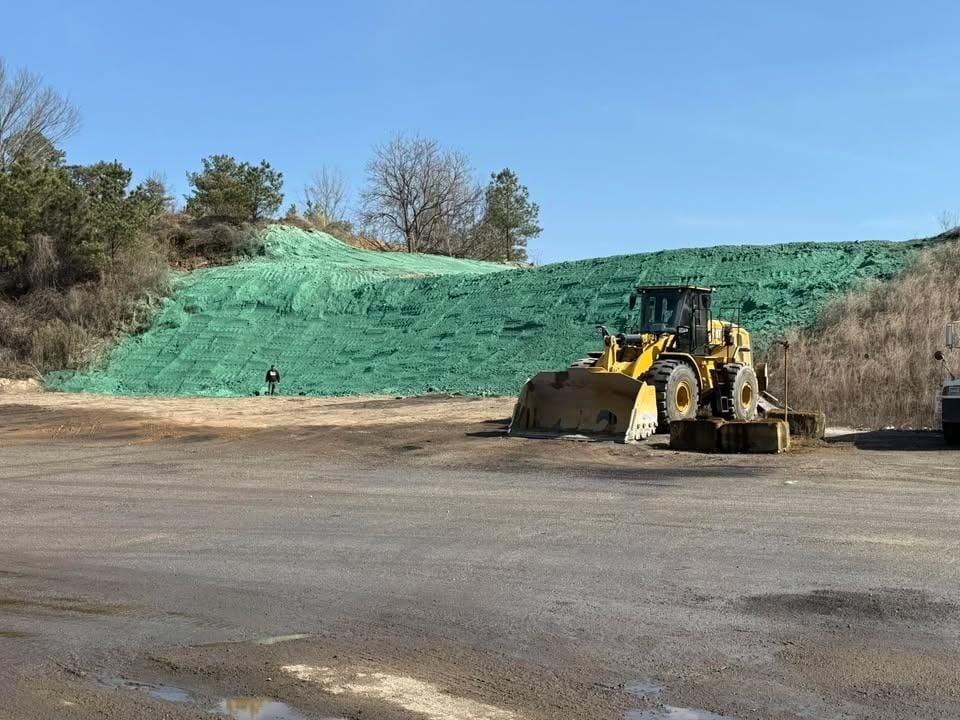
Commercial Hydroseeding Supporting Site Stabilization
Erosion ControlHydroseeding
May 30, 2026by Sandy Creek Hydroseeding

How Hydroseeding Supports Commercial Land Development and Site Stabilization

The effects of poor site stabilization can be devastating. Whether you’re working on a transportation project, an industrial park, a pipeline project, or something else, failing to prioritize the ground stability of your site can result in non-compliance, runoff, slope instability and washout, infrastructure damage, and much more.

That’s where hydroseeding comes in. 

This planting method, used by industry experts with a high-pressure machine, is fast, effective, and supports commercial land development and site stabilization in the following ways: 

Fast Erosion Control

When you know that clearing a site for development could lead to erosion, you need a solution that works quickly. Hydroseeding is the very solution you need for peace of mind during commercial land development.

Hydroseeding involves spraying a slurry of seeds, water, mulch, and soil amendments onto prepared soil to establish new growth. The mulch in the slurry blankets the ground, shielding the exposed topsoil from the effects of heavy rain and wind that may otherwise cause runoff into nearby waterways and properties. 

Regulatory Compliance

Maintaining environmental standards for civil and commercial projects is all part of meeting local council and environmental management requirements. Hydroseeding is both a temporary and permanent site stabilization method that helps project managers comply with what’s expected of them.

Site stabilization compliance is governed by the EPA’s Clean Water Act, which requires: 

  • Soil stabilization measures after earth-disturbing activities that will not resume for more than 14 calendar days, and shorter periods around sensitive ecosystems 
  • Uniform vegetation, with 70% of unpaved and non-structured area covered with perennial vegetation 
  • Permanent cover equivalent if vegetation is impractical, such as geotextiles or gabions 
  • Photo documentation of stabilized areas 

Most states and local municipalities in the United States also have their own programs that impose stricter guidelines, such as geotechnical certifications in flood zones and high-slope terrains. 

Dust Suppression 

If it’s not mud that construction workers are dealing with, it’s dust. Exposed earth on active construction sites often generates dust, making it hard to comply with air quality and municipal regulations.  

Hydroseeding suppresses dust clouds, keeps construction sites cleaner, and assists with compliance. This is because the tackifiers in the hydroseed slurry act as glue, bonding the mulch and fine soil particles together and creating a protective skin that prevents wind from lifting fine dust. 

Fast Germination and Growth

Growing grass or any vegetation is traditionally a slow process, but the opposite is true with hydroseeding. In fact, it’s renowned for fast germination and growth. 

In most cases, grass grows within 5-10 days and begins filling in within 2-4 weeks. Achieving a full lawn can happen in as little as 4-8 weeks. The established vegetation quickly anchors the soil, providing the site stabilization solution you’re looking for. 

Compatibility with Difficult Terrain

You might assume that laying sod is a faster and more efficient land stabilization solution than hydroseeding. However, sod is only suitable on flat ground. If your land development includes uneven terrain, steep slopes, and pipeline trenches, laying sod or even manually seeding isn’t always possible. 

No matter the terrain, hydroseeding is an ideal solution. Experts use high-pressure spray equipment to reach even the most challenging, hard-to-reach slopes and embankments.  

Cost and Labor Efficiency

The less time you must spend on soil stabilization, the less money you also spend, and the easier it can be to remain on budget with your commercial land development project. Out of sod, manual seeding, and hydroseeding, hydroseeding is the most cost-effective and efficient.

By using high-capacity equipment, hydroseeding technicians can cover large areas of land in very little time, resulting in less manual labor and maintenance than with rolling out instant turf.  

Where Hydroseeding is Best Applied

If you’re involved in commercial land development and are exploring your site stabilization options, you’re likely curious about compatibility with this erosion control method. In commercial developments, hydroseeding is best applied in: 

  • Slopes and batters to keep cut-and-fill slopes from sliding during heavy rainfall
  • Subdivisions and business parks to quickly establish uniform landscaping for curb appeal and property value
  • Infrastructure corridors to stabilize road shoulders, pipeline trenches, and railway embankments  

Factors Influencing the Success of Hydroseeding

Hydroseeding is a highly effective site stabilization option for a range of projects, but its success relies on a range of factors: 

  • Soil preparation: Consistent, healthy growth requires proper grading and soil preparation. If your soil is compacted or nutrient-poor, amendments may be needed to improve seed establishment. 
  • Seed selection: Different plants and grasses thrive in different environments. Ensure the seeds you choose are suited to your area by considering your climate, soil conditions, land use, desired appearance, and sun exposure.
  • Tackifiers and mulch: Healthy growth relies on mulch to retain moisture and protect seeds from wind and heat. It also needs binding agents, known as tackifiers, to bind the slurry components together. 
  • Irrigation and maintenance: Hydroseeded areas must be well-maintained during the germination phase to ensure healthy growth. It may be necessary to install temporary irrigation systems or to establish watering schedules. Maintenance may include fertilization, watering, mowing, weed management, and overseeding. 

Schedule Hydroseeding Services with Sandy Creek Hydroseeding in Monroe, Georgia

The entire success of your commercial development can rely on the effectiveness of your soil stabilization techniques and methods. If you haven’t yet created an environmental plan for your upcoming project, talk to the team at Sandy Creek Hydroseeding. Our environmentally friendly hydroseeding service could be the efficient, cost-effective soil stabilization solution you seek.
Read More
779371c6-86b8-4e12-a6b5-4d6fe3d7991e
Hydroseeding
April 30, 2026by Sandy Creek Hydroseeding

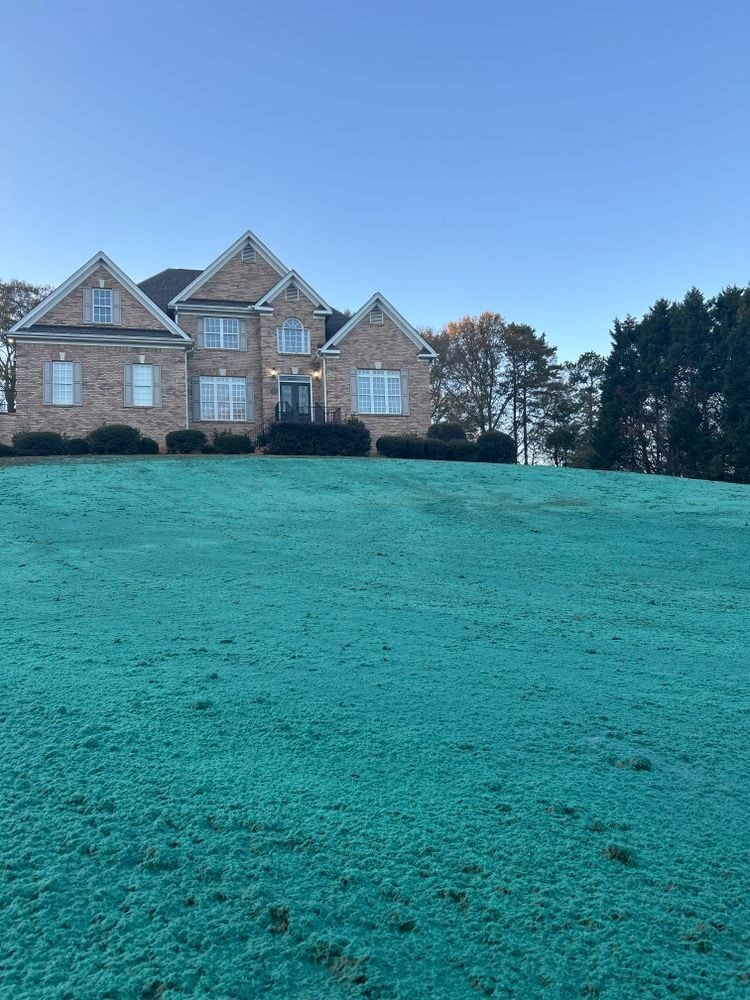
Hydroseed Now for a Full Lawn by Summer: What Property Owners Should Know

Hydroseeding is an excellent grass growth strategy for residential and commercial property owners alike. No matter your property type, hydroseeding allows you to achieve thick, lush, even grass growth without the labor or costs of turfgrass installation. 

If you’ve decided that hydroseeding is your preferred grass growth method, and you want to achieve a full lawn by the time summer arrives, here’s what you need to know:  

Spring is the Ideal Hydroseeding Season

Nature decides when you’ll achieve optimal grass growth. And among all seasons, spring is the best time to contact a trusted hydroseeding business! Spring is the ideal hydroseeding season because it delivers optimal soil and air temperatures. 

Soil temperatures are typically rising to at least 50°F, which means seeds germinate more quickly and develop stronger roots before the heat of summer arrives. Spring also brings plenty of rain, which helps keep the seedbed moist, reducing the need for constant manual irrigation. Rest assured that the mulch component of the hydroseed slurry acts as a stabilizer, preventing seed from washing out during those heavy spring rains. 

Most importantly, all the best parts of spring help a hydroseeded lawn begin to sprout within 5-7 days, often much faster than traditional seeding. 

Post-Application Care is Crucial

While choosing the most reputable, highly-regarded hydroseeding company goes a long way toward ensuring a healthy, luscious lawn, there’s more to it than that. Post-application care is integral to a lawn’s long-term health. 

For the first two to three weeks, a consistently moist mixture is crucial. You’ll need to lightly water the grass 2-3 times per day for 5-10 minutes each session, making sure that it doesn’t dry out. However, you must also avoid overwatering, keeping the soil damp but not creating pools of water or runoff! 

As tempting as it can be to mow your new growth, wait until there is at least 3-4 inches of grass before performing that first mow. You should also avoid foot traffic on the grass for at least 4-5 weeks to allow for strong root growth. 

Timing is Everything

We’ve established that spring is the best season for hydroseeding, especially in and around Monroe, Georgia. However, there are also windows of time throughout the year when hydroseeding is (and isn’t) suitable. Awareness of these windows can ensure you choose this service at the right time and keep growing challenges to a minimum! 

If you perform hydroseeding too late in spring, young grass can start to burn off in the early summer heat. However, if you delay hydroseeding until summer, you’ll need to water 3-4 times a day due to the higher heat and evaporation. This additional level of care can increase associated costs.

If you miss the spring window, aim for early fall from late August to early October. This period of time is generally considered suitable because it combines warm soil with lower weed competition. 

You Shouldn’t Neglect Soil Preparation

There’s no denying that hydroseeding is far less labor-intensive than turfgrass installation, but success still depends on preparation. Simply spraying a seed slurry onto hard, unprepared ground will result in weak, sparse growth. For optimal grass health, soil must be cleared of debris and loosened in preparation for the grass seed. 

You Need to Be Mindful of Weeds

Spring is the best season for hydroseeding, but it’s also the best season for weed growth! While you don’t want your grass to be overtaken by weeds, you also don’t want to risk stunting your grass’s growth by using herbicides too early.

During the first 4-6 weeks of growth, focus on establishing your grass rather than killing weeds with weed-and-feed products or chemical weed killers. In small patches of hydroseeded grass, you may wish to pull weeds by hand while being careful not to pull up grass seedlings. 

While weed growth can be significant during that period, you can use mowing as a powerful, non-chemical tool to control weeds after 4-8 weeks. The first mow is normally around 4-5 weeks after installation: 

1. Stop watering the grass 1-2 days before mowing to prevent tire ruts and seedling damage, 2. Set the mower height to around 3-4 inches to prevent stress to the grass. 

3. Use a walk-behind mower and remove clippings with a catcher to prevent weed seeds from spreading. 

Consult the Experts

If you’re new to hydroseeding, you won’t have all the answers. Rest assured, the experts do! If you intend on having a full, healthy lawn by the time summer arrives, it’s in your best interests to consult hydroseeding professionals to lead the way. They can answer your questions and handle all the hard work so you can achieve your lawn growth goals! 

Call Sandy Creek Hydroseeding in Marietta, GA

Spring is here, and that can only mean one thing – it’s time to get stuck into yard maintenance! Achieve that beautiful, lush green lawn you’ve always wanted with the help of the Sandy Creek Hydroseeding team in Marietta, GA.
For more information about hydroseeding, including its benefits, call or text us today. We’re looking forward to joining you on your residential or commercial hydroseeding journey!

Read More
Hydroseeding and Sod on Large Georgia Property
HydroseedingSod
March 15, 2026by Sandy Creek Hydroseeding

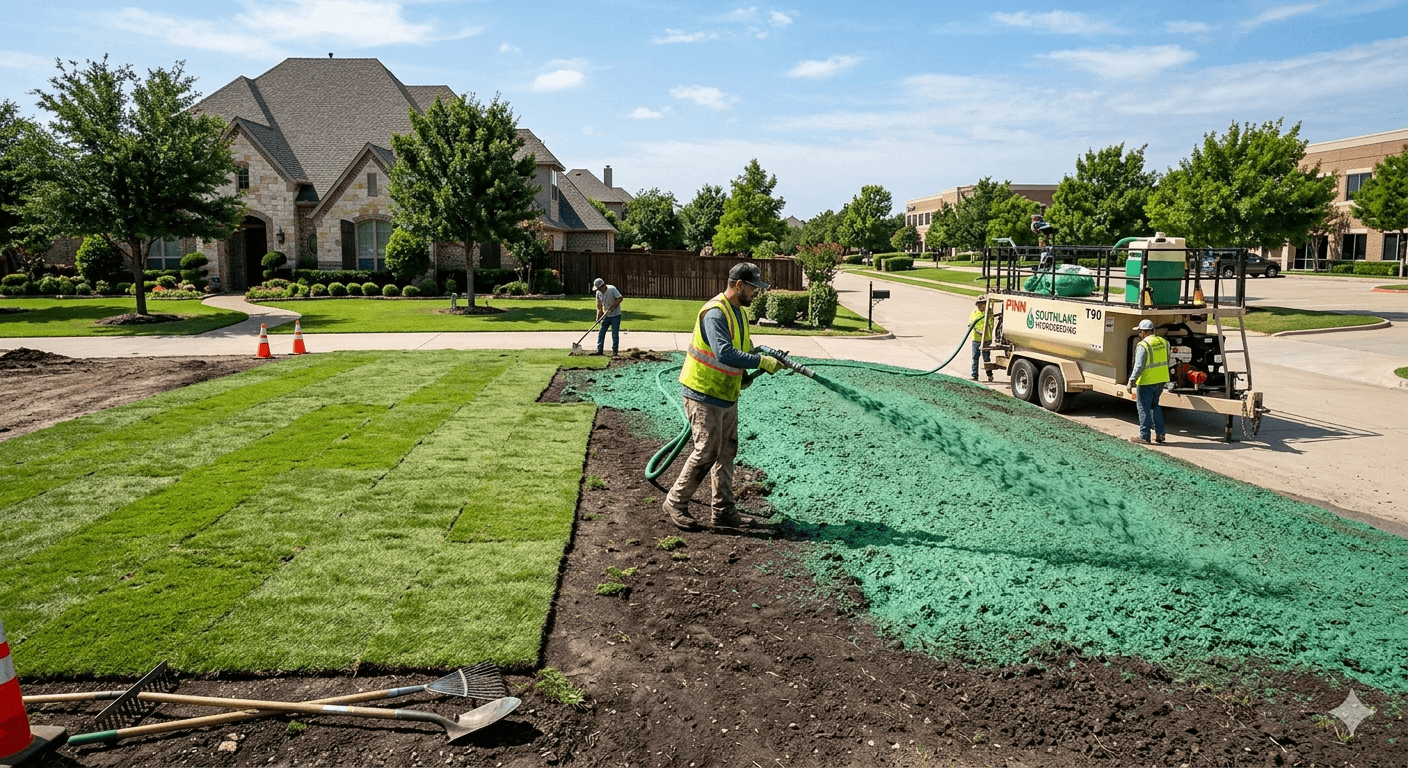
Hydroseeding vs. Sod: Which Is the Best Choice for Large Properties in Georgia?

There’s more to grass than you think. It’s not simply a case of scattering seed and hoping for the best. You must factor in erosion control, the size of the area that requires grass, and even the type of property where grass will need to grow. 

With so much to consider, it’s only natural that you’ll be tossing up between hydroseeding and sod. What is the better option for a large property in Georgia? The following guide will help you make an informed choice. 

What is Hydroseeding? 

Hydroseeding is a lawn installation method in which an experienced landscaping professional sprays a slurry of grass seed, water, mulch, and soil amendments onto prepared soil to establish new grass growth. 

Compared to many other grass-growing methods, hydroseeding promotes fast germination and ensures even distribution. Due to the use of specialized hydroseeding equipment, large grassy areas can be covered quickly and evenly. 

What is Sod? 

Also known as turf grass, sod is grass grown elsewhere, harvested into rolls or squares, and installed on prepared soil. It provides instant coverage because the grass is already mature. 

While instantly beautiful, there is a great deal of labor involved with sod as it must be installed. This can be time-consuming on large properties. 

Cost Differences: Hydroseeding vs. Sod

Money is a major consideration in the grass-growing method you choose for your residential or commercial property. After all, the more of your landscaping budget you use for grass, the less you have for hardscapes, gardens, and other areas! 

Most landscaping companies price hydroseeding and sod on a per-square-foot basis, with hydroseeding ranging from $0.07 to $0.21 per square foot and sod installation at $0.60 to $1.65 per square foot. 

To put that into perspective, it would cost $4,000-$12,100 to hydroseed an area the size of a standard American football field of 57,600 square feet, and $34,600-$95,000 to use sod. 

If you’re a Georgia developer, HOA, or large property owner, hydroseeding would be the more cost-effective choice. 

Why Hydroseeding Works Well for Large Properties 

It’s only natural to want to see immediate results with grass growth, which is why many people opt for sod. However, it’s not that straightforward if you own a large property. 

The labor costs of sod installation can quickly blow out your budget. You’ll also be pleased to know that there are many great benefits to hydroseeding over sod. 

Faster Coverage

Sod must be installed piece by piece, making it a time-consuming task when you have an expansive area to re-grass. Fortunately, quality hydroseeding equipment can quickly cover large areas. As a result, hydroseeding is preferred for many large projects, such as:

  • New residential developments
  • Commercial properties 
  • Golf courses
  • Construction sites
  • Roadside landscaping

Lower Installation Costs

As previously mentioned, lower installation costs are undoubtedly a major advantage of hydroseeding. This service for a large property over half an acre is a mere fraction of what it would cost to install pre-grown turf. 

If you’re setting a landscaping budget and need a rough idea of costs, contact a trusted hydroseeding business in Georgia for a free, no-obligation estimate. 

Strong Root Development

Hydroseeded lawns grow directly into the soil, where they stay. As a result, they grow deep, strong root structures that adapt to the climate and local soil conditions. 

Georgia is known for acidic, heavy red clay soil in the Piedmont region and sandy soil in coastal areas, making grass growth challenging. Therefore, root strength can be crucial for achieving a thick, healthy lawn. 

Grass grown elsewhere and installed on prepared soil needs time to develop a root structure. It starts with a shallow, mature root system that must break through the new ground to anchor in. This takes time and requires consistent watering. Otherwise, failure is a genuine risk.

Better Coverage for Slopes and Uneven Terrain 

Georgia is widely considered flat in the southern half and mountainous in the north. It doesn’t matter whether you live in the flatter or the more sloped part of the state; hydroseeding is a fast, efficient, and accurate coverage option for both. This is because the slurry sticks to the soil, helping prevent erosion.  

Sod is better suited to flat areas. When used on uneven, rolling, or sloped ground and not installed perfectly, it can slip or dry out. 

Custom Grass Blends to Suit Georgia’s Climate

Georgia throws some challenging conditions at home and business owners. It can feel incredibly difficult to grow healthy, lush grass in the midst of an ice storm, drought, or flood!

Hydroseeding offers a solution in the form of grass varieties suited to our unique climate. Whether you prefer the drought and wear tolerance of Bermuda grass, Fescue for cooler and shaded areas, or another variety, you’re well catered to!  

How Long Does Hydroseed Grass Take to Grow? 

You won’t be waiting too long until you have a lush, healthy lawn – whether it’s on a roadside offering erosion protection or adding aesthetic appeal to your residential or commercial property. 

After five to 10 days, the seeds in a hydroseeding slurry start to germinate. By week three to four, the grass is beginning to fill in. By weeks four to eight, you have a thick, established lawn! 

Request Hydroseeding Solutions from Sandy Creek Hydroseeding in Monroe, GA

Hydroseeding is a smart choice in Georgia for its lower installation costs compared to sod, its strong root development, and effective erosion control. Are you ready for this cost-efficient and sustainable lawn solution? It’s time to talk to the team at Sandy Creek Hydroseeding. 

Whether you’re a property developer, a commercial business owner, or a proud homeowner, we’re here to help you get the lush, healthy, and strong lawn you deserve. Call now, and let’s discuss your project.

Read More
SANDY CREEK

When it’s done right, you don’t just get grass. You get stability, longevity, and a property that looks finished.

info@sandycreekhydroseeding.com
404-375-0967

Useful Links

  • Services
  • Contact Us
  • About Us
  • Our Gallery
  • FAQs

Follow Us on Social Media

Instagram
Facebook

© 2026 Sandy Creek Hydroseeding. Powered by Tradition Agency