
logotype
  • Home
  • Services
    • Hydroseeding
    • Land & Brush Clearing
    • Silt Fence & Erosion Control
  • Gallery
  • Blog
  • FAQs
  • Reviews
  • About Us
  • Contact Us
Get in Touch
logotype
logotype
  • Home
  • Services
    • Hydroseeding
    • Land & Brush Clearing
    • Silt Fence & Erosion Control
  • Gallery
  • Blog
  • FAQs
  • Reviews
  • About Us
  • Contact Us
Get in Touch
logotype
  • Home
  • Services
    • Hydroseeding
    • Land & Brush Clearing
    • Silt Fence & Erosion Control
  • Gallery
  • Blog
  • FAQs
  • Reviews
  • About Us
  • Contact Us

Call Us

404-375-0967

Author: Sandy Creek Hydroseeding
HomeArticles Posted by Sandy Creek Hydroseeding
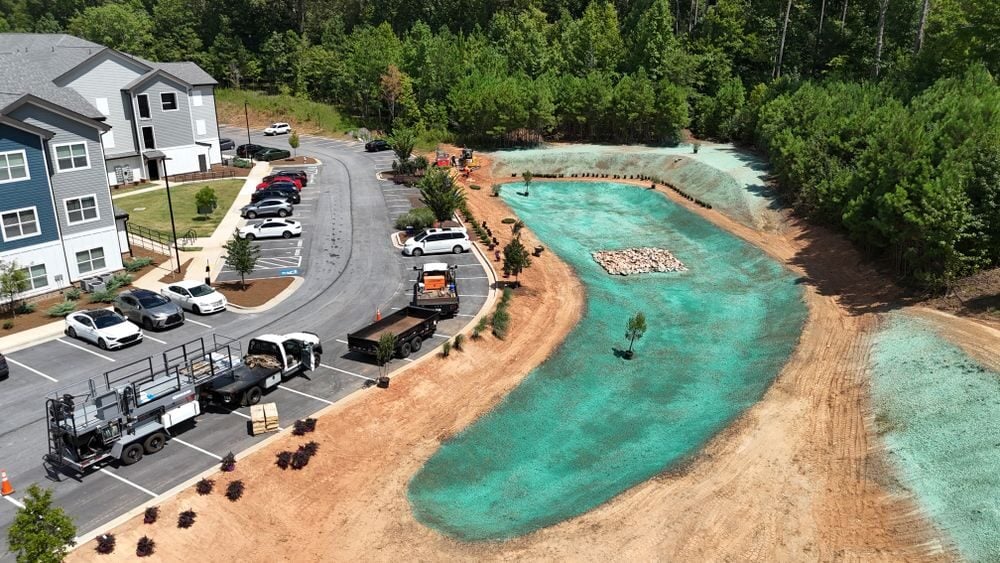
Commercial Hydroseeding Supporting Site Stabilization
Erosion ControlHydroseeding
May 30, 2026by Sandy Creek Hydroseeding

How Hydroseeding Supports Commercial Land Development and Site Stabilization

The effects of poor site stabilization can be devastating. Whether you’re working on a transportation project, an industrial park, a pipeline project, or something else, failing to prioritize the ground stability of your site can result in non-compliance, runoff, slope instability and washout, infrastructure damage, and much more.

That’s where hydroseeding comes in. 

This planting method, used by industry experts with a high-pressure machine, is fast, effective, and supports commercial land development and site stabilization in the following ways: 

Fast Erosion Control

When you know that clearing a site for development could lead to erosion, you need a solution that works quickly. Hydroseeding is the very solution you need for peace of mind during commercial land development.

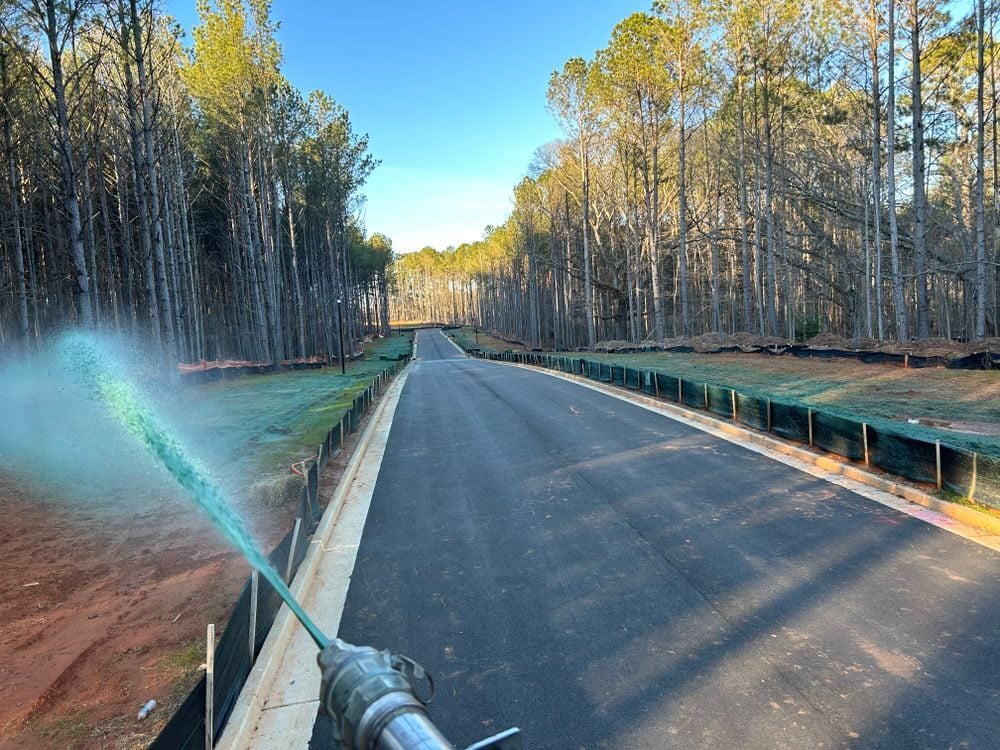
Hydroseeding involves spraying a slurry of seeds, water, mulch, and soil amendments onto prepared soil to establish new growth. The mulch in the slurry blankets the ground, shielding the exposed topsoil from the effects of heavy rain and wind that may otherwise cause runoff into nearby waterways and properties. 

Regulatory Compliance

Maintaining environmental standards for civil and commercial projects is all part of meeting local council and environmental management requirements. Hydroseeding is both a temporary and permanent site stabilization method that helps project managers comply with what’s expected of them.

Site stabilization compliance is governed by the EPA’s Clean Water Act, which requires: 

  • Soil stabilization measures after earth-disturbing activities that will not resume for more than 14 calendar days, and shorter periods around sensitive ecosystems 
  • Uniform vegetation, with 70% of unpaved and non-structured area covered with perennial vegetation 
  • Permanent cover equivalent if vegetation is impractical, such as geotextiles or gabions 
  • Photo documentation of stabilized areas 

Most states and local municipalities in the United States also have their own programs that impose stricter guidelines, such as geotechnical certifications in flood zones and high-slope terrains. 

Dust Suppression 

If it’s not mud that construction workers are dealing with, it’s dust. Exposed earth on active construction sites often generates dust, making it hard to comply with air quality and municipal regulations.  

Hydroseeding suppresses dust clouds, keeps construction sites cleaner, and assists with compliance. This is because the tackifiers in the hydroseed slurry act as glue, bonding the mulch and fine soil particles together and creating a protective skin that prevents wind from lifting fine dust. 

Fast Germination and Growth

Growing grass or any vegetation is traditionally a slow process, but the opposite is true with hydroseeding. In fact, it’s renowned for fast germination and growth. 

In most cases, grass grows within 5-10 days and begins filling in within 2-4 weeks. Achieving a full lawn can happen in as little as 4-8 weeks. The established vegetation quickly anchors the soil, providing the site stabilization solution you’re looking for. 

Compatibility with Difficult Terrain

You might assume that laying sod is a faster and more efficient land stabilization solution than hydroseeding. However, sod is only suitable on flat ground. If your land development includes uneven terrain, steep slopes, and pipeline trenches, laying sod or even manually seeding isn’t always possible. 

No matter the terrain, hydroseeding is an ideal solution. Experts use high-pressure spray equipment to reach even the most challenging, hard-to-reach slopes and embankments.  

Cost and Labor Efficiency

The less time you must spend on soil stabilization, the less money you also spend, and the easier it can be to remain on budget with your commercial land development project. Out of sod, manual seeding, and hydroseeding, hydroseeding is the most cost-effective and efficient.

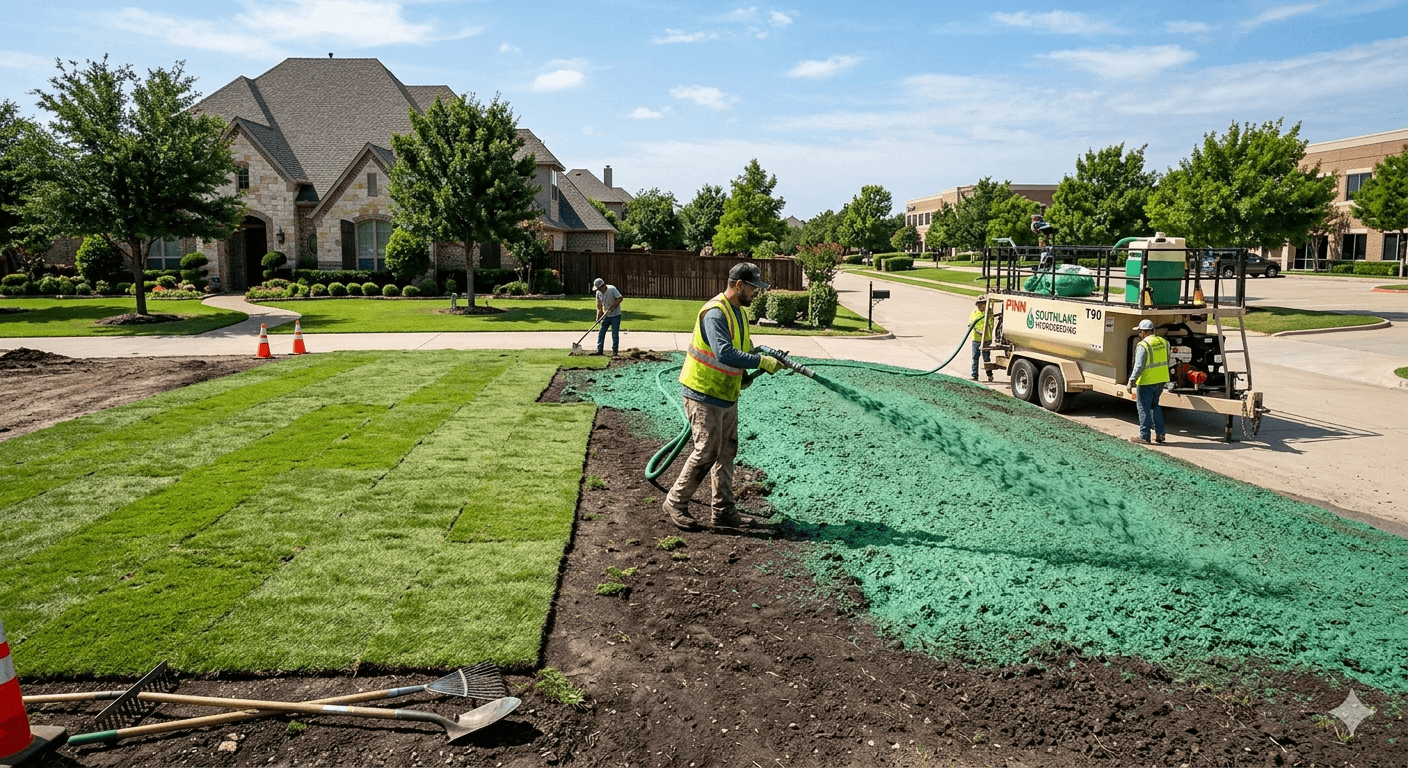
By using high-capacity equipment, hydroseeding technicians can cover large areas of land in very little time, resulting in less manual labor and maintenance than with rolling out instant turf.  

Where Hydroseeding is Best Applied

If you’re involved in commercial land development and are exploring your site stabilization options, you’re likely curious about compatibility with this erosion control method. In commercial developments, hydroseeding is best applied in: 

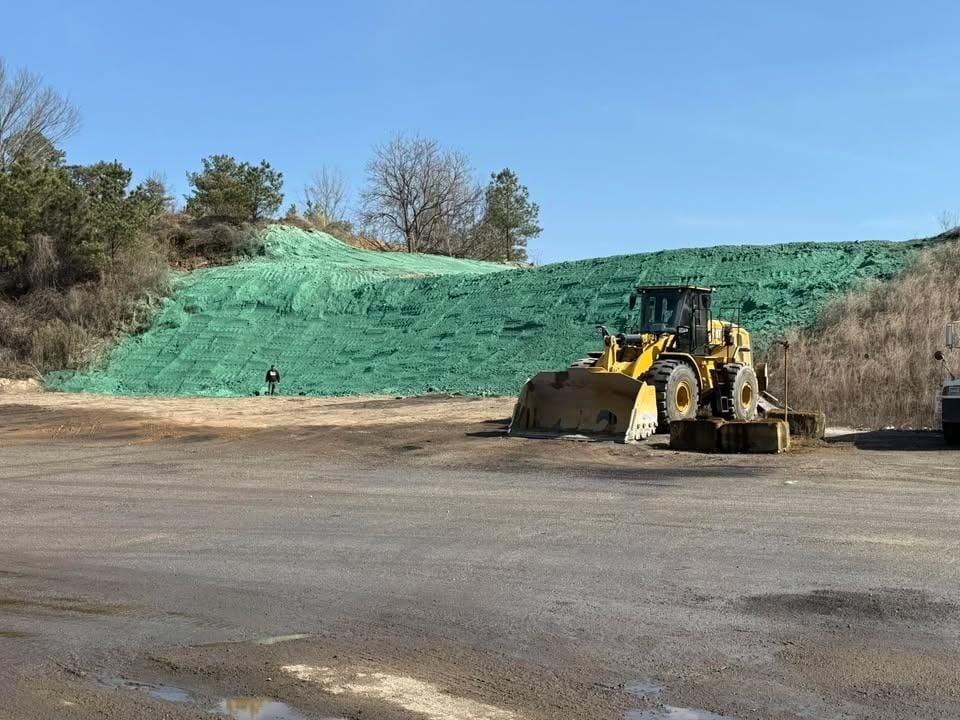
  • Slopes and batters to keep cut-and-fill slopes from sliding during heavy rainfall
  • Subdivisions and business parks to quickly establish uniform landscaping for curb appeal and property value
  • Infrastructure corridors to stabilize road shoulders, pipeline trenches, and railway embankments  

Factors Influencing the Success of Hydroseeding

Hydroseeding is a highly effective site stabilization option for a range of projects, but its success relies on a range of factors: 

  • Soil preparation: Consistent, healthy growth requires proper grading and soil preparation. If your soil is compacted or nutrient-poor, amendments may be needed to improve seed establishment. 
  • Seed selection: Different plants and grasses thrive in different environments. Ensure the seeds you choose are suited to your area by considering your climate, soil conditions, land use, desired appearance, and sun exposure.
  • Tackifiers and mulch: Healthy growth relies on mulch to retain moisture and protect seeds from wind and heat. It also needs binding agents, known as tackifiers, to bind the slurry components together. 
  • Irrigation and maintenance: Hydroseeded areas must be well-maintained during the germination phase to ensure healthy growth. It may be necessary to install temporary irrigation systems or to establish watering schedules. Maintenance may include fertilization, watering, mowing, weed management, and overseeding. 

Schedule Hydroseeding Services with Sandy Creek Hydroseeding in Monroe, Georgia

The entire success of your commercial development can rely on the effectiveness of your soil stabilization techniques and methods. If you haven’t yet created an environmental plan for your upcoming project, talk to the team at Sandy Creek Hydroseeding. Our environmentally friendly hydroseeding service could be the efficient, cost-effective soil stabilization solution you seek.
Read More
Commercial Erosion Control
Erosion Control
May 15, 2026by Sandy Creek Hydroseeding

Commercial Erosion Control Solutions for Georgia Construction Sites

Georgia is currently experiencing a record-breaking building boom. In fact, as of the start of 2026, it was named the leading state for business for the 12th year in a row. And while these construction activities are positive for growth and economic value, they can also pose significant challenges for erosion and sediment control.

Georgia commercial construction firms, municipalities, and developers regularly deal with heavy rainfall, clay-rich soil, and steep grades, which require them to get creative with effective erosion control systems. 

Erosion Risks in Georgia

To determine the importance of erosion control measures in Georgia, you first have to understand the erosion risks that are present. Georgia has a particular climate and soil conditions that create the ‘perfect storm’ regarding erosion challenges.

When the ground is disturbed, high humidity hits, and frequent storms roll through, sediment can quickly enter drainage systems, streams, wetlands, and retention ponds. Construction project managers then find themselves navigating these challenges: 

  • Runoff in waterways and storm drains
  • Slope instability and washouts
  • Topsoil and vegetation loss 
  • Regulatory non-compliance and fines
  • Property and infrastructure damage
  • Project delays due to violations 
  • Maintenance and cleanup costs 

Worst of all, many industries are affected by these challenges, whether you’re building family homes or mixed-use developments: 

  • Highway and transportation projects  
  • Retail and mixed-use developments
  • Industrial parks
  • Warehouses
  • Multi-family and apartment construction
  • Municipal developments
  • Utility and pipeline projects
  • Land clearing and grading 

The good news is that these challenges and issues aren’t guaranteed to happen. Comprehensive planning and the very best in erosion control measures can significantly reduce environmental impacts while ensuring your construction and development projects remain compliant and on track. 

Silt Fence Installation for Erosion Control

One of the most widely used sediment control measures on construction sites throughout Georgia and beyond is silt fences. Silt fences are temporary barriers that intercept the sediment of runoff before it can leave the area and cause damage or pollution to neighboring areas. 

They are installed on construction sites with treated timber or steel stakes and feature durable synthetic geotextile filter fabric, typically woven from polypropylene or polyethylene. These materials are chosen because they allow water to pass through slowly while trapping sediment and dirt. 

In high-flow areas or areas with larger drainage catchments, fences sometimes use metal wire mesh or chain-link as a backing to prevent the fabric from tearing under the weight of trapped mud. 

Silt Fence Benefits

When installed by trusted erosion control experts in Georgia, silt fences provide a range of benefits for construction sites: 

  • A cost-effective form of perimeter control
  • Fast and easy to install and remove
  • Ideal for small-to-medium flow conditions (and adaptable for high-flow areas) 
  • Assist in maintaining compliance with stormwater permits
  • Reduce sediment loss to neighboring properties 

When to Use a Silt Fence

If you’re about to embark on a new construction project in Georgia, you may be curious about the most appropriate erosion control solutions for the job. While you’re spoiled for choice, silt fences are compatible with a variety of sites and project types: 

  • Site perimeters
  • Downslope areas
  • Lot boundaries
  • Utility corridors
  • Drainage pathways 

Once in place with proper staking, trenching, and maintenance, your silt fences can perform optimally during heavy rain events. 

Hydroseeding in Georgia 

No matter where you’re located in Georgia, whether it’s Monroe, Atlanta, Athens, Loganville, or anywhere else, you’ll be pleased to know that hydroseeding is a cost-effective, efficient, and practical erosion control measure for your construction project. 

Hydroseeding involves planting seeds with a mixture of water, mulch, and soil amendments to stabilize soil and quickly establish new growth. In just two to four weeks, you can have lush grass that stabilizes a steep or challenging area that was previously at risk of erosion. 

Hydroseeding Benefits

The benefits of hydroseeding are wide-ranging, whether you’re relying on it as a construction project manager or an everyday homeowner: 

  • Fast application over large areas
  • Reduced erosion risk 
  • Improved seed-to-soil contact 
  • Faster vegetation growth 
  • Cost-effective compared to other growth methods, like sod installation 

Alongside being fast, cost-effective, and an efficient erosion control solution, hydroseeding is also compatible with a range of construction projects, including: 

  • Utility easements
  • Highway embankments
  • Commercial developments
  • Disturbed grading areas
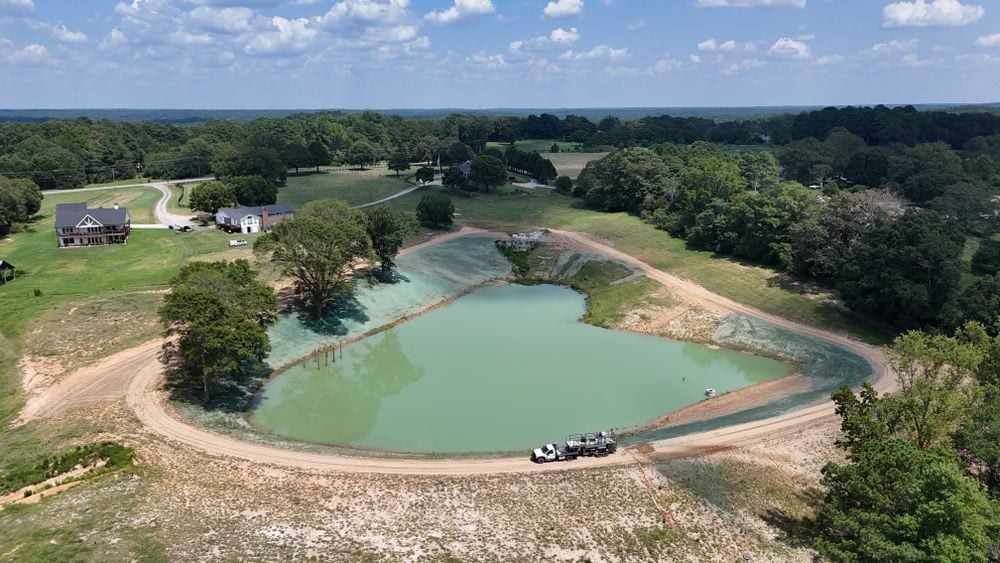
  • Detention pond slopes 

In Georgia, hydroseeding is commonly used to achieve long-term erosion protection and to meet permit requirements during the final stabilization phase of a project. 

Best Practices When Considering Erosion Control Measures

While there are many important decisions to be made during a construction project, erosion control measures are among the most crucial. To maximize their effectiveness, you should follow these best practices: 

  • Integrate your erosion control planning into the earliest stages of your site development. 
  • Limit the volume of exposed soil by only disturbing the areas you’re actively working on.
  • Inspect your erosion control measures frequently and thoroughly, including before and after storm events, to identify any required maintenance or repairs. 
  • Regularly repair damaged controls, remove accumulated sediment, and replace worn fabric or damaged stakes. 
  • Apply temporary or permanent erosion-control and stabilization methods as soon as grading activities are complete. 

Discuss Your Erosion Control Requirements with Sandy Creek Hydroseeding in Monroe, Georgia

Are you ready to get your next construction project underway, but need robust erosion control measures in place? It’s time to call Sandy Creek Hydroseeding in Monroe, GA. 

Our experienced team provides a range of erosion control solutions for commercial and residential sites across north-central Georgia. Contact us today to learn more about silt fences and hydroseeding. We look forward to being the solution your construction site needs. 

Read More
779371c6-86b8-4e12-a6b5-4d6fe3d7991e
Hydroseeding
April 30, 2026by Sandy Creek Hydroseeding

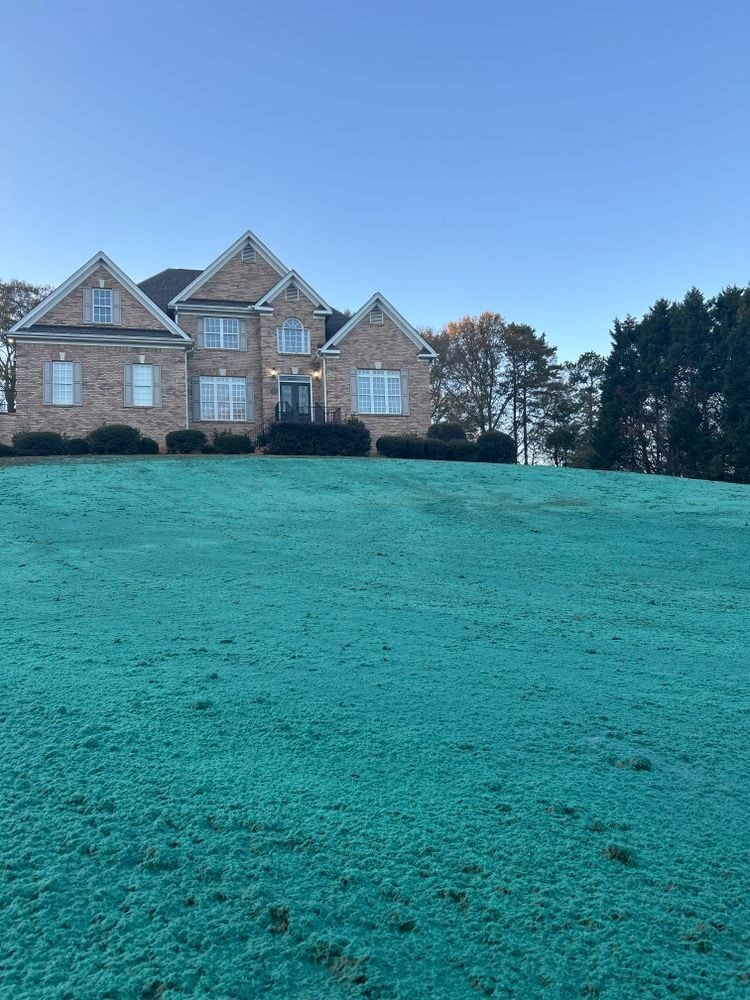
Hydroseed Now for a Full Lawn by Summer: What Property Owners Should Know

Hydroseeding is an excellent grass growth strategy for residential and commercial property owners alike. No matter your property type, hydroseeding allows you to achieve thick, lush, even grass growth without the labor or costs of turfgrass installation. 

If you’ve decided that hydroseeding is your preferred grass growth method, and you want to achieve a full lawn by the time summer arrives, here’s what you need to know:  

Spring is the Ideal Hydroseeding Season

Nature decides when you’ll achieve optimal grass growth. And among all seasons, spring is the best time to contact a trusted hydroseeding business! Spring is the ideal hydroseeding season because it delivers optimal soil and air temperatures. 

Soil temperatures are typically rising to at least 50°F, which means seeds germinate more quickly and develop stronger roots before the heat of summer arrives. Spring also brings plenty of rain, which helps keep the seedbed moist, reducing the need for constant manual irrigation. Rest assured that the mulch component of the hydroseed slurry acts as a stabilizer, preventing seed from washing out during those heavy spring rains. 

Most importantly, all the best parts of spring help a hydroseeded lawn begin to sprout within 5-7 days, often much faster than traditional seeding. 

Post-Application Care is Crucial

While choosing the most reputable, highly-regarded hydroseeding company goes a long way toward ensuring a healthy, luscious lawn, there’s more to it than that. Post-application care is integral to a lawn’s long-term health. 

For the first two to three weeks, a consistently moist mixture is crucial. You’ll need to lightly water the grass 2-3 times per day for 5-10 minutes each session, making sure that it doesn’t dry out. However, you must also avoid overwatering, keeping the soil damp but not creating pools of water or runoff! 

As tempting as it can be to mow your new growth, wait until there is at least 3-4 inches of grass before performing that first mow. You should also avoid foot traffic on the grass for at least 4-5 weeks to allow for strong root growth. 

Timing is Everything

We’ve established that spring is the best season for hydroseeding, especially in and around Monroe, Georgia. However, there are also windows of time throughout the year when hydroseeding is (and isn’t) suitable. Awareness of these windows can ensure you choose this service at the right time and keep growing challenges to a minimum! 

If you perform hydroseeding too late in spring, young grass can start to burn off in the early summer heat. However, if you delay hydroseeding until summer, you’ll need to water 3-4 times a day due to the higher heat and evaporation. This additional level of care can increase associated costs.

If you miss the spring window, aim for early fall from late August to early October. This period of time is generally considered suitable because it combines warm soil with lower weed competition. 

You Shouldn’t Neglect Soil Preparation

There’s no denying that hydroseeding is far less labor-intensive than turfgrass installation, but success still depends on preparation. Simply spraying a seed slurry onto hard, unprepared ground will result in weak, sparse growth. For optimal grass health, soil must be cleared of debris and loosened in preparation for the grass seed. 

You Need to Be Mindful of Weeds

Spring is the best season for hydroseeding, but it’s also the best season for weed growth! While you don’t want your grass to be overtaken by weeds, you also don’t want to risk stunting your grass’s growth by using herbicides too early.

During the first 4-6 weeks of growth, focus on establishing your grass rather than killing weeds with weed-and-feed products or chemical weed killers. In small patches of hydroseeded grass, you may wish to pull weeds by hand while being careful not to pull up grass seedlings. 

While weed growth can be significant during that period, you can use mowing as a powerful, non-chemical tool to control weeds after 4-8 weeks. The first mow is normally around 4-5 weeks after installation: 

1. Stop watering the grass 1-2 days before mowing to prevent tire ruts and seedling damage, 2. Set the mower height to around 3-4 inches to prevent stress to the grass. 

3. Use a walk-behind mower and remove clippings with a catcher to prevent weed seeds from spreading. 

Consult the Experts

If you’re new to hydroseeding, you won’t have all the answers. Rest assured, the experts do! If you intend on having a full, healthy lawn by the time summer arrives, it’s in your best interests to consult hydroseeding professionals to lead the way. They can answer your questions and handle all the hard work so you can achieve your lawn growth goals! 

Call Sandy Creek Hydroseeding in Marietta, GA

Spring is here, and that can only mean one thing – it’s time to get stuck into yard maintenance! Achieve that beautiful, lush green lawn you’ve always wanted with the help of the Sandy Creek Hydroseeding team in Marietta, GA.
For more information about hydroseeding, including its benefits, call or text us today. We’re looking forward to joining you on your residential or commercial hydroseeding journey!

Read More
Silt Fence for Erosion Control
Erosion ControlSilt Fence
April 15, 2026by Sandy Creek Hydroseeding

What Happens If You Don’t Use a Silt Fence? Erosion Risks for Monroe, GA Construction Sites

Construction sites can get messy. There can be piles of dirt everywhere as planning for new structures and landscapes gets underway. 

However, consequences can go well beyond just a messy worksite. Without appropriate erosion measures in place, several risks quickly stack up. In this guide, you’ll learn what a silt fence is, the erosion risks for Monroe, GA construction sites, and the penalties you can face for not using a silt fence. 

What is a Silt Fence? 

A silt fence is a temporary sediment control device most commonly used on construction sites to stop soil erosion and protect water quality. Most silt fences consist of synthetic geotextile fabric attached to metal or wooden stakes and are designed to slow water runoff, trap sediment, and let water pass through. 

Silt fences are typically installed on the downhill side of disturbed soil and along boundaries to manage sheetflow. Although they are made of high-quality UV-stabilized polypropylene, they require regular inspection for tears and sagging to ensure compliance with environmental regulations. 

Consequences of Not Using a Silt Fence 

When you’ve got to stick to a timeline and budget, it can be tempting to look at ways to save time and money. However, you should never skip erosion control measures like silt fences, or you may face these consequences: 

Increased Soil Erosion

Digging up dirt on a construction site undoubtedly loosens the soil. Without plants, grass, and trees, there’s nothing to hold it in place. If you don’t install a silt fence to slow down the runoff, rainwater can easily carry exposed soil downhill. Slopes and cleared land also erode rapidly, and you risk losing valuable topsoil, making landscaping much harder. 

Waterway Pollution

In Monroe, GA, and surrounding Walton County, many areas are vulnerable to runoff, especially low-lying ground near rivers, streams, and creeks. Without a silt fence to hold sediment and filter water, the sediment flows into storm drains and nearby waterways. 

As dirt enters drainage systems, it can clog them and increase the risk of flooding. Polluted runoff also harms aquatic ecosystems and decreases the water quality. 

Regulatory Violations and Fines

All construction sites are required to implement ‘Best Management Practices’ when it comes to erosion and sedimentation control. This means that they must implement structural measures and vegetative practices that will ‘provide effective erosion and sedimentation control,’ such as silt fences, sediment basins, hydroseeding, and erosion control blankets for soil stabilization.

Failure to implement any suitable measures can result in regulatory violations, fines, stop-work orders, and project delays.  

Neighbor and Community Impact

You might be doing something positive for the environment by developing previously unused land, but you can also cause harm before you get to that point. Mud can wash out from your construction site onto roads, creating hazards. Nearby properties can also experience flooding or damage. It’s even possible to face complaints from neighbors that escalate into legal issues. 

Environmental Harm

Sediment washing away from your construction site into waterways and neighboring land can seem like a short-term issue, but it can cause permanent or long-lasting environmental harm.

Sediment buildup can alter stream channels and disrupt local wildlife habitats. There’s even potential for plant life to struggle to regrow in now-degraded soil. 

Site Damage

While damage to waterways and neighboring properties is reason enough to install silt fences, there can also be consequences for construction sites. Without appropriate sediment control measures, gullies and washouts can form on-site. Construction managers may also have to contend with compromised foundations and grading, not to mention the extra labor and materials needed to repair erosion damage. 

Benefits of Installing Silt Fences

Protecting the environment is undoubtedly one of the leading reasons to install silt fences on your construction sites in Monroe, Georgia. However, there are also other benefits: 

  • Adhere to environmental regulations to prevent fines and work stoppages 
  • Reduce the risk of sediment runoff
  • Protect stormwater systems 
  • Conserve topsoil for slope stabilization
  • Keep site disturbance to a minimum 

Contact Sandy Creek Hydroseeding for Silt Fence Installation in Monroe, GA

For site organization, environmental protection, and ensuring compliance, it’s time to prioritize silt fence installation on your construction site in Monroe, Georgia. Talk to the team at Sandy Creek Hydroseeding about your needs. 

We can suggest and implement a number of erosion control measures, including silt fencing and hydroseeding, to protect your construction site and the surrounding environment.

Read More
Commercial Property Erosion Control
Uncategorized
March 30, 2026by Sandy Creek Hydroseeding

Why Erosion Control Is Critical for Construction Sites in Georgia

In construction, it can often be hard to balance growth and opportunity with the environment. While new developments bring significant economic value, clearing large areas of land can also pose challenges such as runoff and sediment buildup. In Georgia, heavy rainfall, clay-heavy soils, and sensitive ecosystems mean that erosion control measures aren’t just recommended; they’re essential. 

In this guide, we’ll explain why erosion control measures such as hydroseeding and silt fences are so important in Georgia, and the options available to developers and property owners seeking to mitigate erosion risks. 

Why Exposed Soil is Such a Big Problem

There is no way to get around exposed soil during a construction project in Georgia. However, when large areas of land are cleared and graded, often with the help of professional skid steer services, the soil is left vulnerable to wind and rain. Because of the heavy storms and rainfall Georgia is known for, that soil can wash away before vegetation has a chance to take root.

If that happens, the soil can join stormwater runoff and enter streets, drainage systems, and waterways. Before long, cities and developers can be dealing with clogged storm drains, boggy construction areas, and huge maintenance costs. 

Then there’s the environmental cost. Sediment runoff can carry nutrients and pollutants that negatively impact surrounding areas. 

Runoff and Sediment Pollution

Sediment pollution refers to excessive amounts of sand, oil, and other mineral particles that wash into waterways. Out of all causes, construction is the main one. Rainwater flows over exposed soil, picks up fine particles, and carries them into nearby bodies of water, such as rivers, lakes, and wetlands. 

The damage doesn’t end there. Once those pollutants enter the water, they degrade water quality, harm aquatic habitats, and disrupt local ecosystems. The additional sediment can even block sunlight from reaching underwater plants and affect fish health. It’s devastating consequences like this that make it crucial for construction sites to have strict erosion control measures in place. 

Erosion Control Regulations for Construction Projects

Construction project managers in Georgia must follow strict erosion control regulations and stormwater management plans to protect communities and waterways. This involves implementing a range of practices to prevent sediment from leaving their sites. 

While there are many erosion control methods available, two are among the most common: hydroseeding and silt fences. 

Hydroseeding

Hydroseeding is one of the most widely used erosion control techniques for large developments and construction projects alike. It involves spraying a slurry of seeds, water, mulch, and soil amendments onto prepared soil surfaces. Once sprayed, the seeds germinate quickly while protecting the soil from rain and wind. 

Hydroseeding is a far more efficient and faster way to establish grass cover than traditional seeding methods. This is because the mulch layer retains moisture and stops the seeds from washing away. As a result, grass and ground cover are more likely to grow evenly across a large area. 

As vegetation grows, the roots of grasses and plants bind the soil together, creating a strong natural barrier against erosion. By investing in hydroseeding, site managers can stabilize their slopes, reduce sediment runoff, and improve landscape durability. 

Compatibility with Large Construction Site Projects

Because hydroseeding helps establish vegetation quickly, it’s widely preferred for large construction site projects. Companies request it for residential developments, commercial sites, utility corridors, roadways, and more. 

Due to its rapid establishment, hydroseeding helps construction sites meet their environmental compliance requirements sooner and reduces the risk of erosion damage during heavy rain while construction is still underway.  

Environmental and Long-Term Benefits

There’s more to hydroseeding than construction site protection. The environmental benefits are also profound! When soil is stabilized with root structures, the risk of sediment entering waterways is reduced, improving stormwater management and protecting nearby habitats. 

The vegetation also enhances the development’s appearance, contributing to a far healthier landscape upon completion of the construction project. 

Silt Fences

Hydroseeding is a long-term erosion control measure, but silt fences can be a much-needed short-term measure while vegetation is still establishing. Silt fences are permeable fabric fences installed along a construction site’s perimeter or at the base of a slope. 

They capture sediment and slow stormwater runoff before it leaves the site. While water can flow through the fence, the fabric prevents soil particles from being carried along with it. This stops sediment from entering nearby roads, waterways, and storm drains. 

Discuss Erosion Control with Sandy Creek Hydroseeding in Monroe, GA

Erosion control is a crucial part of responsible construction projects in Georgia. Whether you wish to learn more about short-term silt fences or long-term hydroseeding, Sandy Creek Hydroseeding is the team to call.

We help residential and commercial property owners maintain compliance with environmental regulations, prevent runoff, and protect water quality. Ask us about our erosion control options today. 

Read More
Hydroseeding and Sod on Large Georgia Property
HydroseedingSod
March 15, 2026by Sandy Creek Hydroseeding

Hydroseeding vs. Sod: Which Is the Best Choice for Large Properties in Georgia?

There’s more to grass than you think. It’s not simply a case of scattering seed and hoping for the best. You must factor in erosion control, the size of the area that requires grass, and even the type of property where grass will need to grow. 

With so much to consider, it’s only natural that you’ll be tossing up between hydroseeding and sod. What is the better option for a large property in Georgia? The following guide will help you make an informed choice. 

What is Hydroseeding? 

Hydroseeding is a lawn installation method in which an experienced landscaping professional sprays a slurry of grass seed, water, mulch, and soil amendments onto prepared soil to establish new grass growth. 

Compared to many other grass-growing methods, hydroseeding promotes fast germination and ensures even distribution. Due to the use of specialized hydroseeding equipment, large grassy areas can be covered quickly and evenly. 

What is Sod? 

Also known as turf grass, sod is grass grown elsewhere, harvested into rolls or squares, and installed on prepared soil. It provides instant coverage because the grass is already mature. 

While instantly beautiful, there is a great deal of labor involved with sod as it must be installed. This can be time-consuming on large properties. 

Cost Differences: Hydroseeding vs. Sod

Money is a major consideration in the grass-growing method you choose for your residential or commercial property. After all, the more of your landscaping budget you use for grass, the less you have for hardscapes, gardens, and other areas! 

Most landscaping companies price hydroseeding and sod on a per-square-foot basis, with hydroseeding ranging from $0.07 to $0.21 per square foot and sod installation at $0.60 to $1.65 per square foot. 

To put that into perspective, it would cost $4,000-$12,100 to hydroseed an area the size of a standard American football field of 57,600 square feet, and $34,600-$95,000 to use sod. 

If you’re a Georgia developer, HOA, or large property owner, hydroseeding would be the more cost-effective choice. 

Why Hydroseeding Works Well for Large Properties 

It’s only natural to want to see immediate results with grass growth, which is why many people opt for sod. However, it’s not that straightforward if you own a large property. 

The labor costs of sod installation can quickly blow out your budget. You’ll also be pleased to know that there are many great benefits to hydroseeding over sod. 

Faster Coverage

Sod must be installed piece by piece, making it a time-consuming task when you have an expansive area to re-grass. Fortunately, quality hydroseeding equipment can quickly cover large areas. As a result, hydroseeding is preferred for many large projects, such as:

  • New residential developments
  • Commercial properties 
  • Golf courses
  • Construction sites
  • Roadside landscaping

Lower Installation Costs

As previously mentioned, lower installation costs are undoubtedly a major advantage of hydroseeding. This service for a large property over half an acre is a mere fraction of what it would cost to install pre-grown turf. 

If you’re setting a landscaping budget and need a rough idea of costs, contact a trusted hydroseeding business in Georgia for a free, no-obligation estimate. 

Strong Root Development

Hydroseeded lawns grow directly into the soil, where they stay. As a result, they grow deep, strong root structures that adapt to the climate and local soil conditions. 

Georgia is known for acidic, heavy red clay soil in the Piedmont region and sandy soil in coastal areas, making grass growth challenging. Therefore, root strength can be crucial for achieving a thick, healthy lawn. 

Grass grown elsewhere and installed on prepared soil needs time to develop a root structure. It starts with a shallow, mature root system that must break through the new ground to anchor in. This takes time and requires consistent watering. Otherwise, failure is a genuine risk.

Better Coverage for Slopes and Uneven Terrain 

Georgia is widely considered flat in the southern half and mountainous in the north. It doesn’t matter whether you live in the flatter or the more sloped part of the state; hydroseeding is a fast, efficient, and accurate coverage option for both. This is because the slurry sticks to the soil, helping prevent erosion.  

Sod is better suited to flat areas. When used on uneven, rolling, or sloped ground and not installed perfectly, it can slip or dry out. 

Custom Grass Blends to Suit Georgia’s Climate

Georgia throws some challenging conditions at home and business owners. It can feel incredibly difficult to grow healthy, lush grass in the midst of an ice storm, drought, or flood!

Hydroseeding offers a solution in the form of grass varieties suited to our unique climate. Whether you prefer the drought and wear tolerance of Bermuda grass, Fescue for cooler and shaded areas, or another variety, you’re well catered to!  

How Long Does Hydroseed Grass Take to Grow? 

You won’t be waiting too long until you have a lush, healthy lawn – whether it’s on a roadside offering erosion protection or adding aesthetic appeal to your residential or commercial property. 

After five to 10 days, the seeds in a hydroseeding slurry start to germinate. By week three to four, the grass is beginning to fill in. By weeks four to eight, you have a thick, established lawn! 

Request Hydroseeding Solutions from Sandy Creek Hydroseeding in Monroe, GA

Hydroseeding is a smart choice in Georgia for its lower installation costs compared to sod, its strong root development, and effective erosion control. Are you ready for this cost-efficient and sustainable lawn solution? It’s time to talk to the team at Sandy Creek Hydroseeding. 

Whether you’re a property developer, a commercial business owner, or a proud homeowner, we’re here to help you get the lush, healthy, and strong lawn you deserve. Call now, and let’s discuss your project.

Read More
SANDY CREEK

When it’s done right, you don’t just get grass. You get stability, longevity, and a property that looks finished.

info@sandycreekhydroseeding.com
404-375-0967

Useful Links

  • Services
  • Contact Us
  • About Us
  • Our Gallery
  • FAQs

Follow Us on Social Media

Instagram
Facebook

© 2026 Sandy Creek Hydroseeding. Powered by Tradition Agency