

Hydroseeding
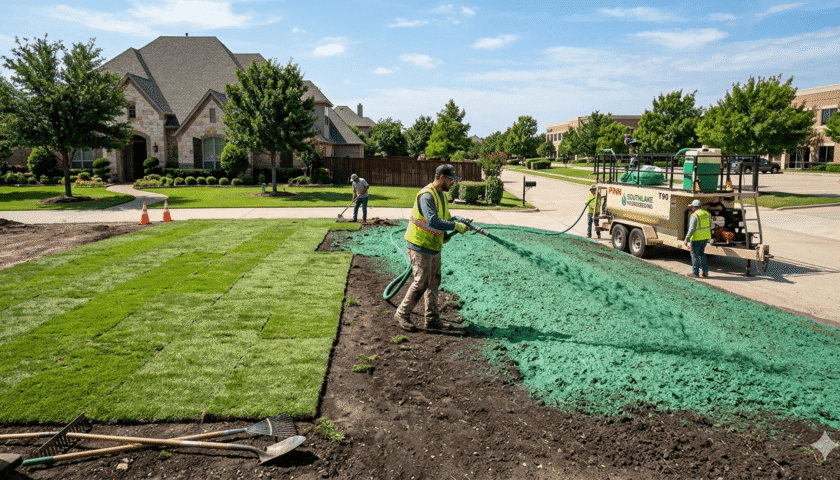
Hydroseeding is an excellent grass growth strategy for residential and commercial property owners alike. No matter your property type, hydroseeding allows you to achieve thick, lush, even grass growth without the labor or costs of turfgrass installation.
If you’ve decided that hydroseeding is your preferred grass growth method, and you want to achieve a full lawn by the time summer arrives, here’s what you need to know:
Spring is the Ideal Hydroseeding Season
Nature decides when you’ll achieve optimal grass growth. And among all seasons, spring is the best time to contact a trusted hydroseeding business! Spring is the ideal hydroseeding season because it delivers optimal soil and air temperatures.
Soil temperatures are typically rising to at least 50°F, which means seeds germinate more quickly and develop stronger roots before the heat of summer arrives. Spring also brings plenty of rain, which helps keep the seedbed moist, reducing the need for constant manual irrigation. Rest assured that the mulch component of the hydroseed slurry acts as a stabilizer, preventing seed from washing out during those heavy spring rains.
Most importantly, all the best parts of spring help a hydroseeded lawn begin to sprout within 5-7 days, often much faster than traditional seeding.
Post-Application Care is Crucial
While choosing the most reputable, highly-regarded hydroseeding company goes a long way toward ensuring a healthy, luscious lawn, there’s more to it than that. Post-application care is integral to a lawn’s long-term health.
For the first two to three weeks, a consistently moist mixture is crucial. You’ll need to lightly water the grass 2-3 times per day for 5-10 minutes each session, making sure that it doesn’t dry out. However, you must also avoid overwatering, keeping the soil damp but not creating pools of water or runoff!
As tempting as it can be to mow your new growth, wait until there is at least 3-4 inches of grass before performing that first mow. You should also avoid foot traffic on the grass for at least 4-5 weeks to allow for strong root growth.
Timing is Everything
We’ve established that spring is the best season for hydroseeding, especially in and around Monroe, Georgia. However, there are also windows of time throughout the year when hydroseeding is (and isn’t) suitable. Awareness of these windows can ensure you choose this service at the right time and keep growing challenges to a minimum!
If you perform hydroseeding too late in spring, young grass can start to burn off in the early summer heat. However, if you delay hydroseeding until summer, you’ll need to water 3-4 times a day due to the higher heat and evaporation. This additional level of care can increase associated costs.
If you miss the spring window, aim for early fall from late August to early October. This period of time is generally considered suitable because it combines warm soil with lower weed competition.
You Shouldn’t Neglect Soil Preparation
There’s no denying that hydroseeding is far less labor-intensive than turfgrass installation, but success still depends on preparation. Simply spraying a seed slurry onto hard, unprepared ground will result in weak, sparse growth. For optimal grass health, soil must be cleared of debris and loosened in preparation for the grass seed.
You Need to Be Mindful of Weeds
Spring is the best season for hydroseeding, but it’s also the best season for weed growth! While you don’t want your grass to be overtaken by weeds, you also don’t want to risk stunting your grass’s growth by using herbicides too early.
During the first 4-6 weeks of growth, focus on establishing your grass rather than killing weeds with weed-and-feed products or chemical weed killers. In small patches of hydroseeded grass, you may wish to pull weeds by hand while being careful not to pull up grass seedlings.
While weed growth can be significant during that period, you can use mowing as a powerful, non-chemical tool to control weeds after 4-8 weeks. The first mow is normally around 4-5 weeks after installation:
1. Stop watering the grass 1-2 days before mowing to prevent tire ruts and seedling damage, 2. Set the mower height to around 3-4 inches to prevent stress to the grass.
3. Use a walk-behind mower and remove clippings with a catcher to prevent weed seeds from spreading.
Consult the Experts
If you’re new to hydroseeding, you won’t have all the answers. Rest assured, the experts do! If you intend on having a full, healthy lawn by the time summer arrives, it’s in your best interests to consult hydroseeding professionals to lead the way. They can answer your questions and handle all the hard work so you can achieve your lawn growth goals!
Call Sandy Creek Hydroseeding in Marietta, GA
Spring is here, and that can only mean one thing – it’s time to get stuck into yard maintenance! Achieve that beautiful, lush green lawn you’ve always wanted with the help of the Sandy Creek Hydroseeding team in Marietta, GA.
For more information about hydroseeding, including its benefits, call or text us today. We’re looking forward to joining you on your residential or commercial hydroseeding journey!