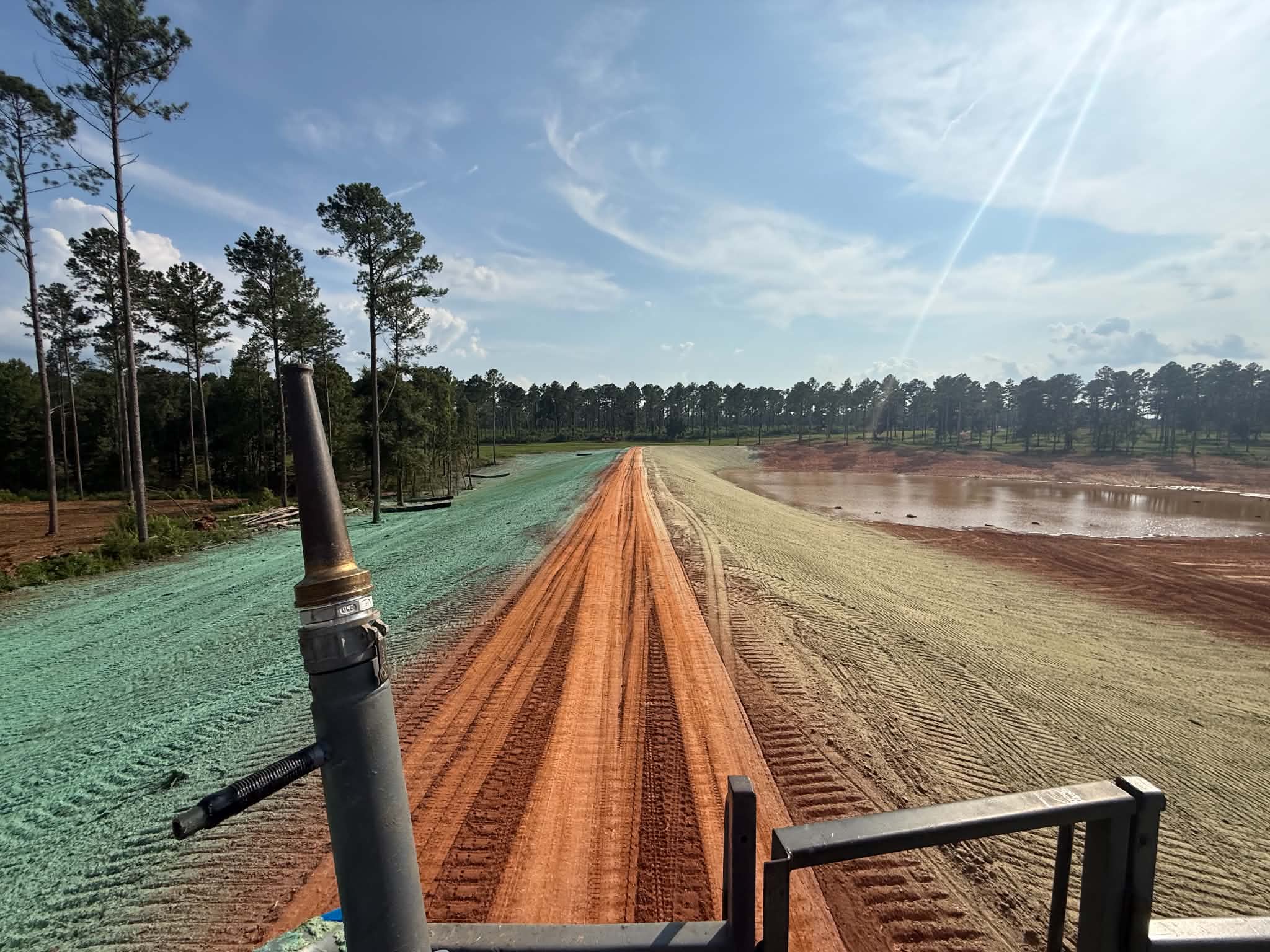
If bare soil is washing downhill after rain, leaving ruts, exposed roots, or muddy streaks, the ground needs attention before the problem spreads. Small failures can turn into wider loss of soil, weak slopes, and areas that will not hold grass well without the right stabilization plan.
Sandy Creek Hydroseeding is based in Monroe, GA and provides soil erosion control for homes, slopes and construction sites across Athens and nearby communities. We look at the ground conditions, the amount of exposed soil and the finish you need, then apply the right erosion control approach for the site.
Erosion often starts quietly. A slope may still look usable at a glance, but the soil is already shifting under rain impact and surface runoff. The sooner the surface is stabilized, the less repair work usually follows.
These signs often point to the same basic issue: the ground is too exposed to handle water movement on its own. For properties in Monroe and the surrounding area, that can mean the difference between a stable planting area and a slope that keeps breaking down.
Erosion control is the work of keeping soil in place when rain and runoff try to move it. It includes surface cover like hydroseeding, straw and blankets, plus barriers like silt fence that catch sediment before it leaves the site.
Good erosion and sediment control protects your slopes, keeps new seed from washing away and stops mud from reaching driveways, roads and storm drains.
Every site needs a different mix of cover, restraint, and seeding support. We do not treat erosion control as one single product. Instead, we match the method to the soil, slope, and project stage.
This approach helps property owners avoid repeated patchwork fixes. It also gives the site a cleaner, more controlled finish while the ground begins to hold together.
Different erosion control tools solve different problems. Some keep sediment from leaving the site. Others help seed stay where it is placed. Some do both. Knowing the role of each method makes it easier to choose the right combination.
Silt fence is used to help catch sediment before it moves offsite. It is a practical choice where runoff needs a barrier during active soil disturbance or while new ground cover is still establishing.
Blankets help shield bare soil from rain impact and surface wash. They are useful on slopes and other exposed areas where seed needs support and the surface needs a stabilizing layer.
Straw blowing can help protect exposed ground from direct rainfall, while temporary grassing offers a faster cover option for short-term stabilization. These methods are often helpful when a site needs soil protection before permanent cover is ready.
When seed placement is part of the project, no-till drill seeding and broadcast seeding can help establish vegetation with less surface disturbance than some other methods. The right choice depends on the site layout and the level of exposure.
Hydroseeding Services can also be part of the erosion control plan when the goal is to establish ground cover across open areas that need quick, even coverage. For some sites, that is the most efficient path toward reducing washout and building a more stable surface.
Slopes lose soil faster than flat ground because water picks up speed as it runs downhill. Slope erosion control usually needs more than seed alone.
For steep slopes, we often combine hydroseeding with erosion control blankets so the surface is covered right away and roots can grow through the blanket. On gentler hillsides, hydroseeding with a heavier mulch layer or straw cover is often enough.
We handle residential slope stabilization for backyards and retaining wall areas, as well as larger hillsides on commercial and development sites.
Erosion control is useful anywhere exposed soil needs help holding together before grass takes over. In Monroe, Athens and nearby areas, this often comes up after clearing, grading, trenching or landscaping work.
We commonly help with:
The goal is not just to cover the ground. It is to slow soil loss, keep materials where they belong, and support the type of surface cover the property needs next.
Construction site erosion control is required on most Georgia job sites. We install the erosion control measures shown on your erosion and sediment control plan, including silt fence, blankets, straw and temporary grassing.
These erosion control BMPs help your site pass inspections, keep sediment out of streets and storm drains, and get permanent grass established so the site can close out.
Erosion can escalate quickly once rain starts moving soil. A slope that seems manageable today can become harder to stabilize after repeated washout. That is why erosion control works best when it is planned early, before the exposed soil has already been damaged.
Delaying treatment can lead to a few common problems:
When the surface is protected sooner, the site has a better chance to hold shape and support vegetation without repeated rework.
When you contact Sandy Creek Hydroseeding for erosion control, we begin with the conditions you are seeing on the ground. That means looking at the slope, the exposed soil, and the areas where water is moving. From there, we recommend a practical plan based on the site rather than a one-size approach.
The result is a cleaner, more manageable site that is better prepared for rain, runoff, and new growth.
Sandy Creek Hydroseeding is based in Monroe, GA and works within about a 1.5 hour radius. We regularly serve Athens, Watkinsville, Bogart, Winterville, Hull, Comer, Jefferson, Winder, Social Circle, Greensboro and Stockbridge.
Projects across these areas often need different combinations of coverage and stabilization. Some sites need a barrier first. Others need surface cover and seeding support together. We work through those details so the ground is treated in the right order.
If you see bare spots, channels cut by runoff, sediment leaving the site, or seed washing away, the soil likely needs stabilization. Slopes and freshly disturbed areas are especially worth watching.
Yes. Graded sites often have exposed soil that needs cover before rain begins moving it. Erosion control can help protect the surface while vegetation begins to establish.
Silt fence is used to catch sediment and help keep it from moving offsite. Erosion control blankets sit on the soil surface and help protect exposed ground from rainfall and washout.
It can be. Hydroseeding helps establish vegetation across bare ground, and that new cover can play an important role in stabilizing soil over time.
No. The right solution depends on slope, soil exposure, water movement, and how quickly the site needs cover. Some projects need one method, while others need several working together.
Yes. Temporary grassing is often used when a site needs quicker cover while longer-term vegetation or site work is still developing. It helps reduce bare soil exposure during that period.
The most common erosion control methods are hydroseeding, straw blowing, erosion control blankets, silt fence and temporary grassing. Most sites use two or more together.
Cover the soil as quickly as possible and slow the water down. On slopes we usually combine seeding with blankets or heavy mulch so the surface stays protected while roots grow.
Yes. We install silt fence, blankets, straw and temporary grassing for builders and contractors, and help get permanent grass established before the site closes out.
If your property in Monroe, Athens or a nearby area is losing soil or showing signs of runoff damage, it is time to protect the surface before the problem spreads. Sandy Creek Hydroseeding offers erosion control methods that match your site and support a more stable finish.
Call (770) 601-9042 or email Adam@sandycreekhydroseeding.com to talk about your ground conditions and the right erosion control approach for your property.

Get Started
Tell us about your property, slope, grading conditions, or seeding goals, and we will help you choose the right approach for better ground cover and erosion control.